AGV Material Transport
Coordinate finished-roll or parent-roll movement between defined stations, routes and production interfaces.
- Defined pickup and drop-off stations
- Route and traffic review
- Production-line handshakes
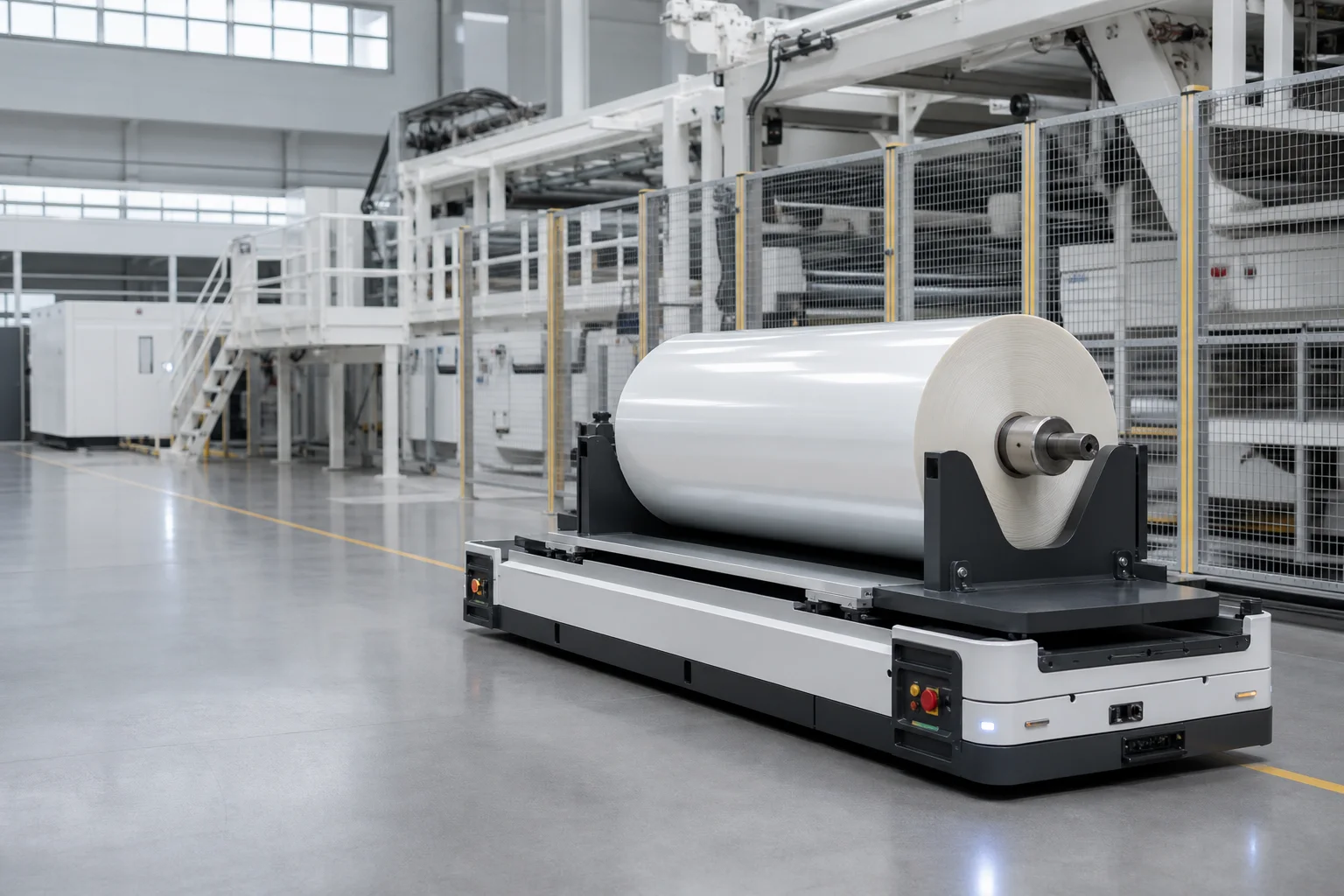
Connect production stations with a load unit the vehicle can handle safely
An AGV is only one part of the transport system. Roll support, pickup geometry, route clearance, floor condition, traffic interaction and station controls determine whether the workflow is practical.
SlitForge maps the handling route and coordinates the review between the converting-equipment supplier and the material-transport provider. Final responsibility at every handoff is stated in the proposal.
- Starting point
- A defined roll cradle, pallet, shaft cart or another stable load unit
- Transport path
- Dock, identify, travel under traffic rules, then hand off at a known station
- Confirmation basis
- Load, route, floor, cycle, navigation, controls and plant safety review
Four interfaces turn vehicle movement into a production workflow
Each station needs a repeatable mechanical position and a clear control handshake before autonomous movement can be accepted.
Receive
The load is stabilized at a defined pickup height, orientation and docking position.
Identify
The system confirms the load, destination and transport permission before departure.
Travel
The vehicle follows the approved route with obstacle detection and plant traffic rules.
Handoff
The destination station confirms alignment and readiness before the load is released.
Vehicle and station scope are reviewed as one system
- Low-profile, forked or custom load-carrier vehicle
- Roll cradle, pallet or shaft-cart interface
- Docking and position-confirmation hardware
- Navigation, traffic management and charging strategy
- Station PLC handshake and job dispatch
- Optional load identification, weighing or traceability
Responsibility and acceptance points stay visible
Load interface
Support geometry, retention and allowable contact points are confirmed before vehicle selection.
Facility route
Floor, clearance, fire routes, pedestrian zones and local safety requirements remain visible.
Control ownership
Dispatch, station handshake, recovery and manual override responsibilities are documented.
Review the machine interface before defining automation
Share the load unit, stations and plant layout
We will map the handoffs and coordinate a supplier-confirmed AGV integration review.