Automatic Knife Positioning
Coordinate repeatable knife setup and recipe-led changeovers around the confirmed slitter, tooling and material requirements.
- Recipe-led knife positions
- Changeover workflow review
- Slitter control interface
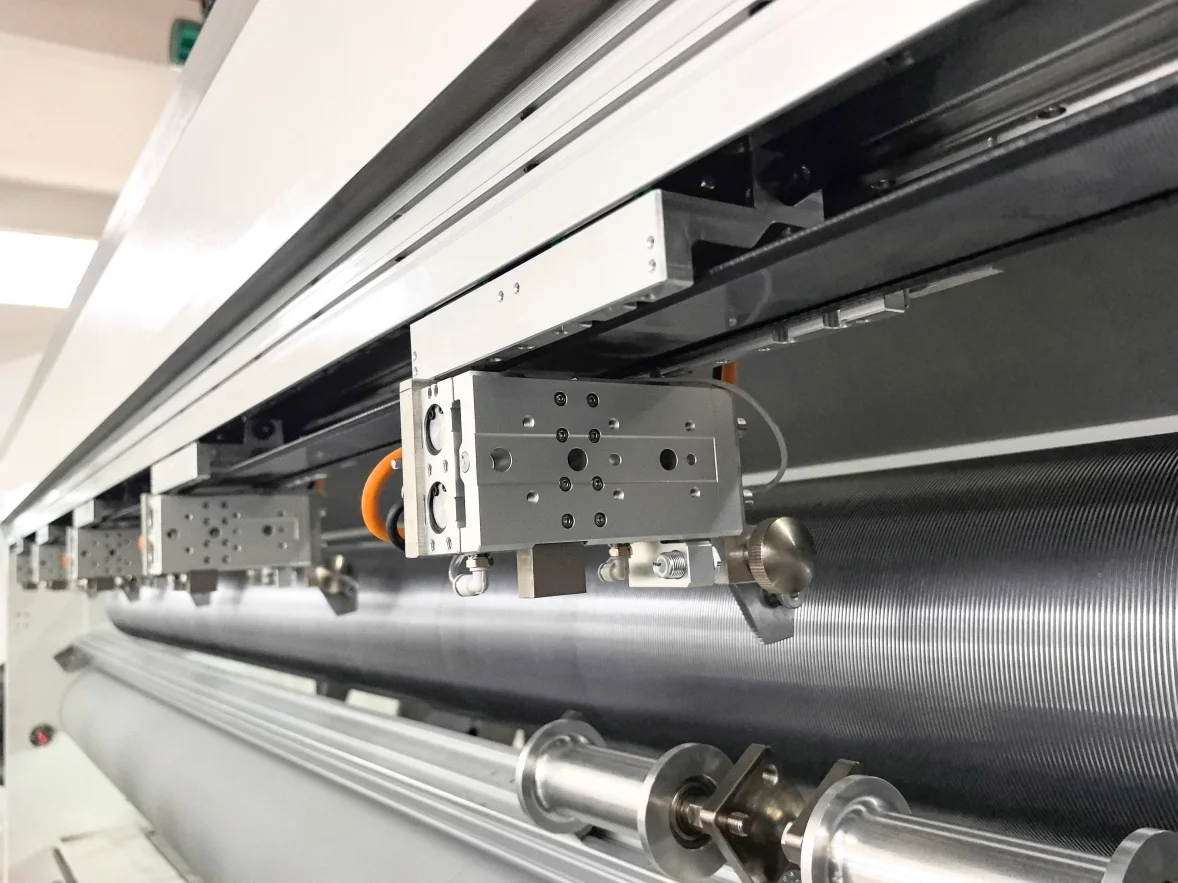
Turn repeat slit patterns into a controlled setup sequence
Automatic positioning can reduce manual adjustment time, but it does not replace the engineering review of knife type, minimum spacing, material behavior, holder access and cut-quality requirements.
SlitForge organizes the slit-pattern data and coordinates the tooling, motion and controls review with the responsible machine supplier. Final positioning accuracy and cycle time remain proposal-specific.
- Starting point
- Approved slit patterns, master web width and tooling arrangement
- Positioning path
- Load recipe, calculate positions, move holders, then verify setup
- Confirmation basis
- Material, knife type, slit count, spacing, tolerance and line controls
Four checks make positioning useful on the production floor
The sequence must prevent an incorrect recipe, obstructed holder or unverified knife position from entering production.
Define
Record the master web width, trim strategy, finished widths and permitted recipe revisions.
Calculate
Convert the approved slit pattern into machine coordinates and validate holder clearances.
Position
Move the compatible knife holders under controlled speed and interlock conditions.
Verify
Confirm actual holder positions and complete operator checks before the web is started.
Automation scope follows the existing slitting architecture
- Motorized knife-holder positioning axis
- Recipe management and access control
- Trim and slit-width calculation logic
- Holder presence and obstruction checks
- Machine PLC and HMI integration
- Manual confirmation or measured-position feedback
Responsibility and acceptance points stay visible
Cutting process
Knife selection, overlap, penetration and cut quality are confirmed against the buyer material.
Motion and controls
Recipe ownership, axis limits, interlocks and recovery behavior are documented.
Acceptance criteria
Representative patterns, measured positions and changeover timing are agreed before testing.
Review the machine interface before defining automation
Share the widths, tooling and changeover target
We will structure the positioning requirements and coordinate a supplier-confirmed automation review.